Inside, the log wall is exposed and the central heating still burns wood. The house has been upgraded to modern standards, and a heat pump adds cooling in summer.
Beds are made up before arrival with cotton satin linen. Bedroom 1 has a king bed, and bedrooms 2 and 3 have queen beds, one of them under the sloping roof.
Outdoors · Ute
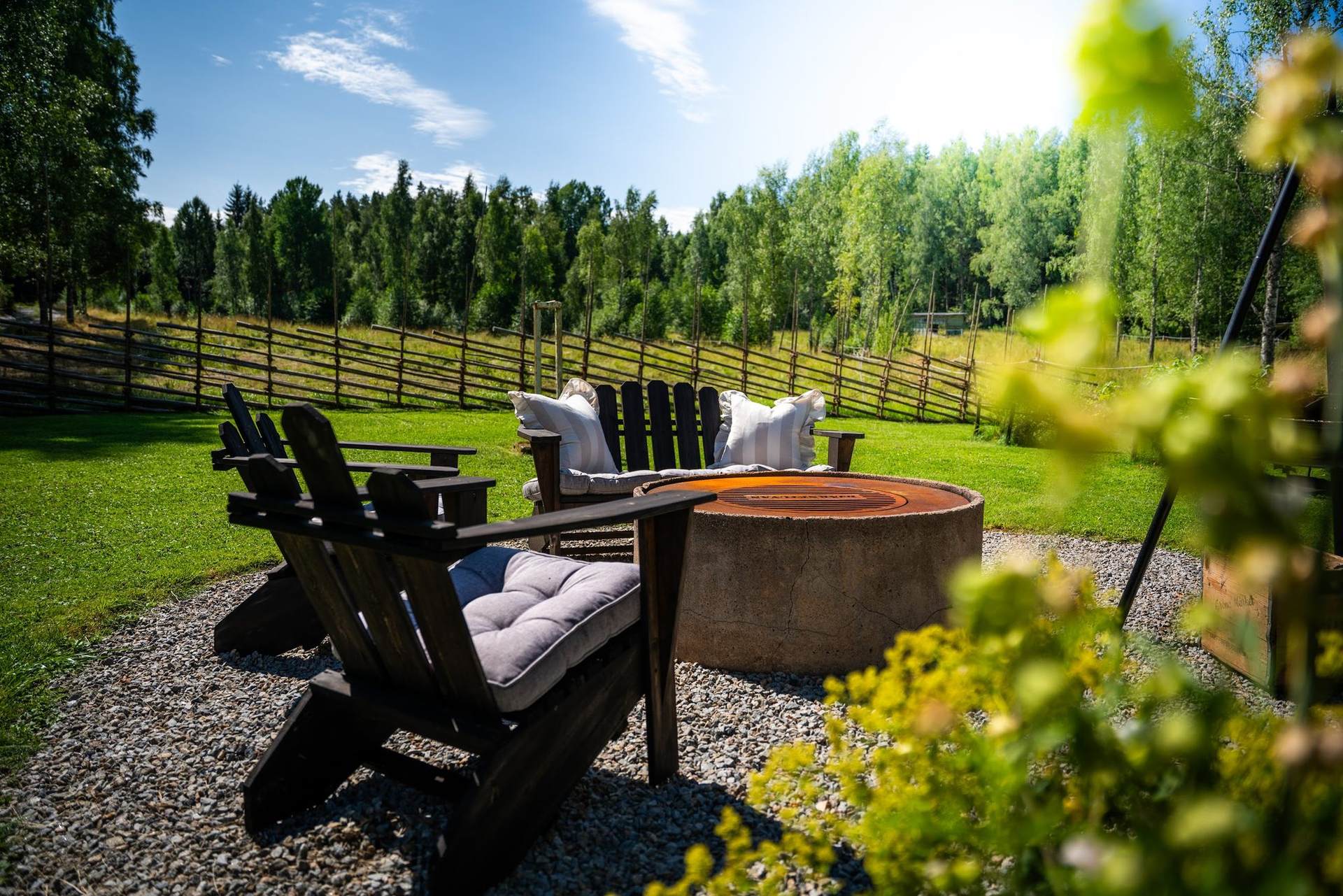
The fire pit and the long evenings
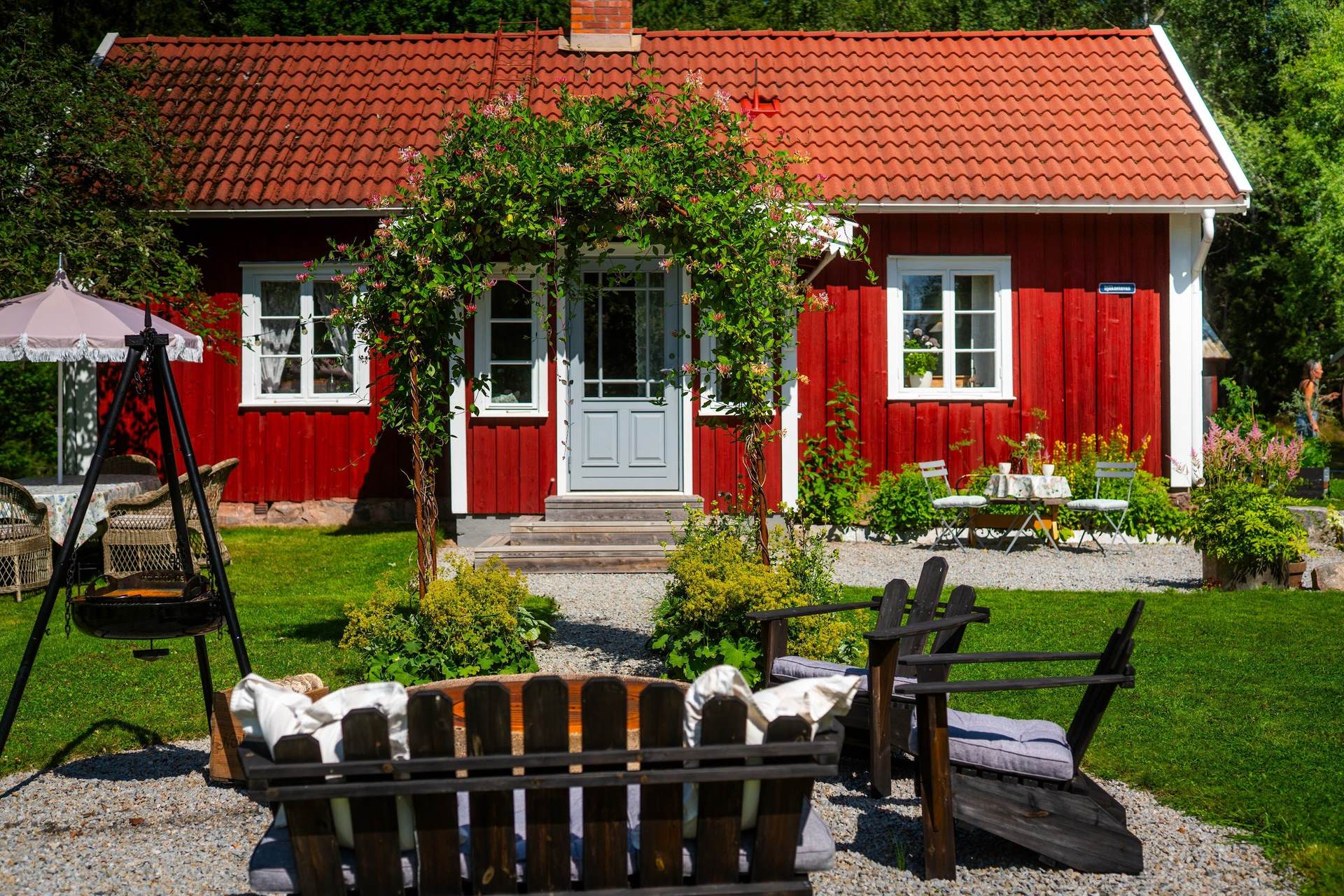
The garden has a stone fire pit with a hanging grill, a charcoal barbecue with utensils, an outdoor dining table and a private patio. Firewood comes from the woodshed in the barn.
moose stew with chanterelles
In June the sun sets after ten in the evening and the night stays light, so guests eat outside late. Deer and foxes have come to the edge of the lawn at dusk, according to several guests.
firewood from the barn
The grounds · Tomten
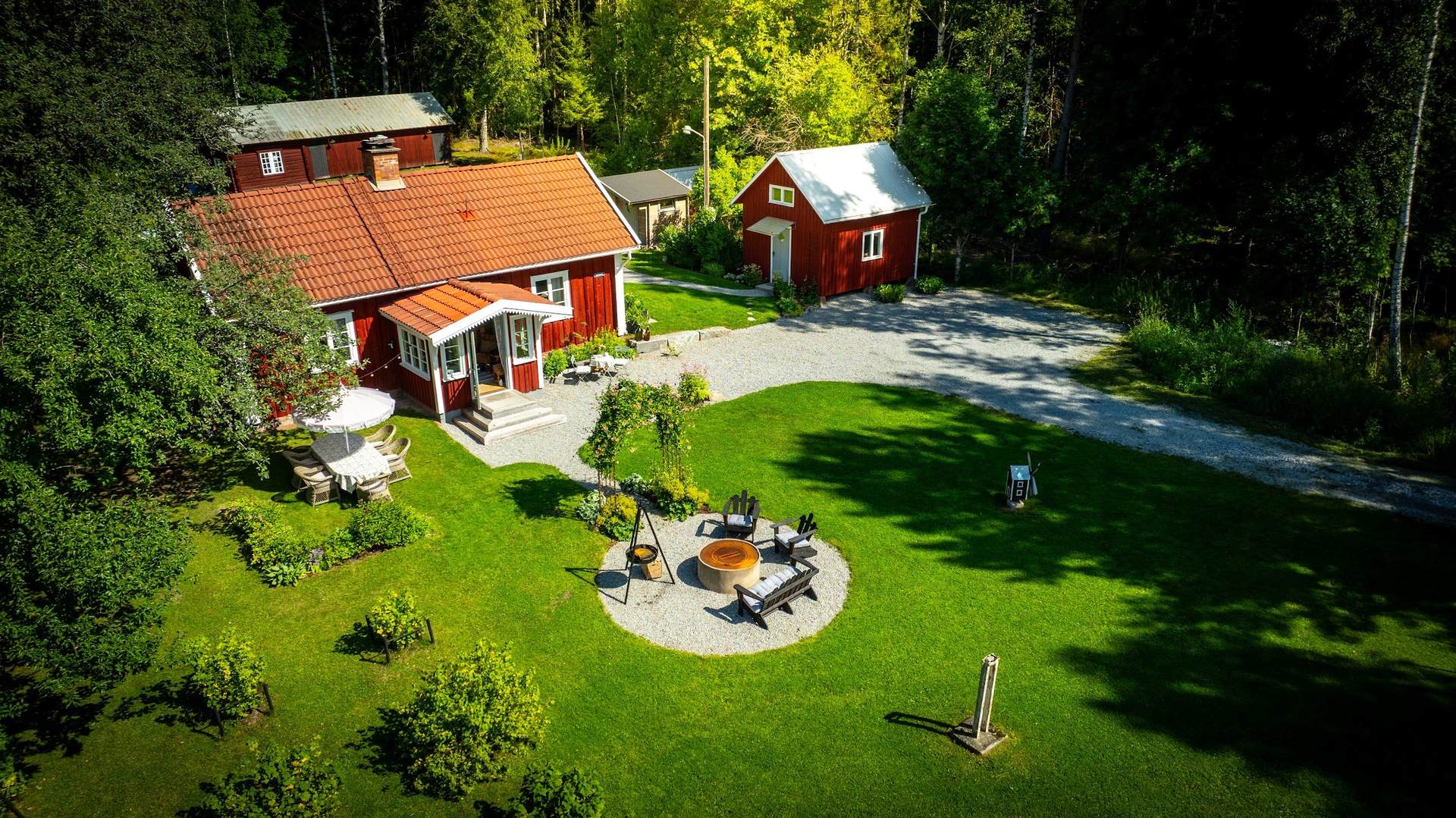
Three buildings on an open lawn
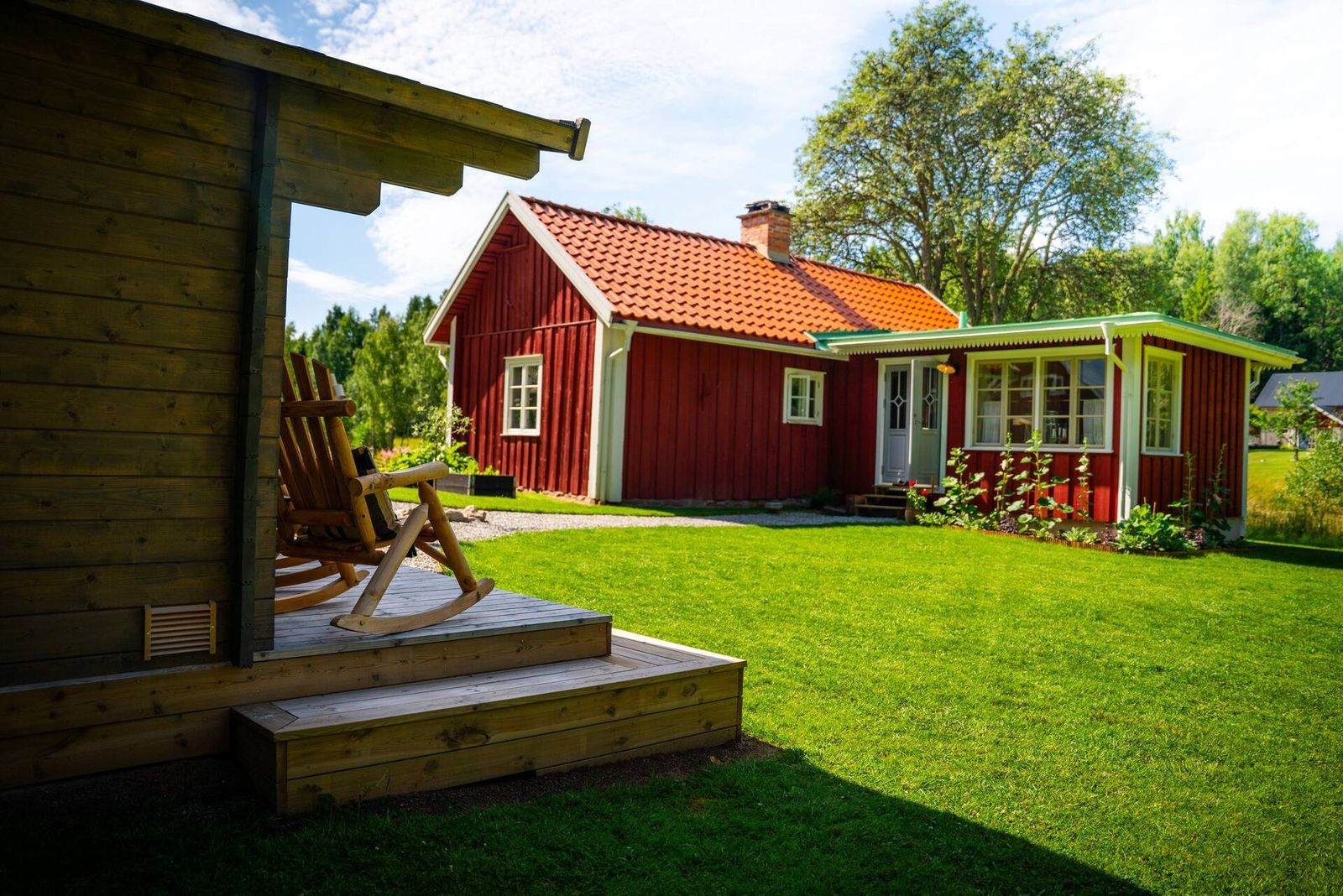
Guests have the whole property: the main house, the guest house and the sauna, set around a lawn bordered by forest and only partly fenced. Children have a playroom inside with toys and books for ages 2 to 5.
three buildings, one lawn
Sauna · Bastu
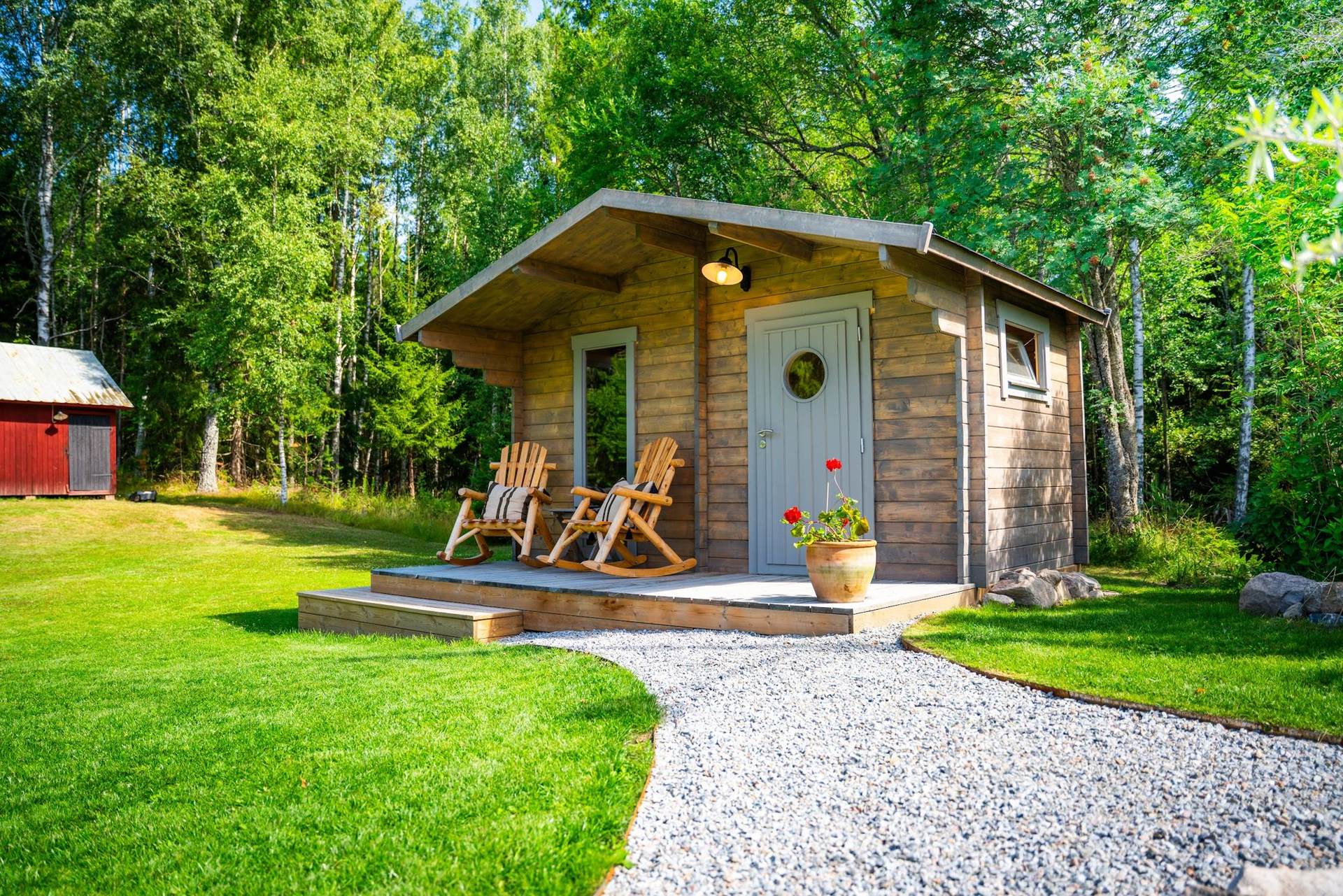
A private sauna
The sauna is for guests only, with wooden benches, a stone-filled heater and a wooden bucket and ladle for the water. From the bench to the fire pit is a short walk in a towel.
inside the sauna
for guests only
Winter nights
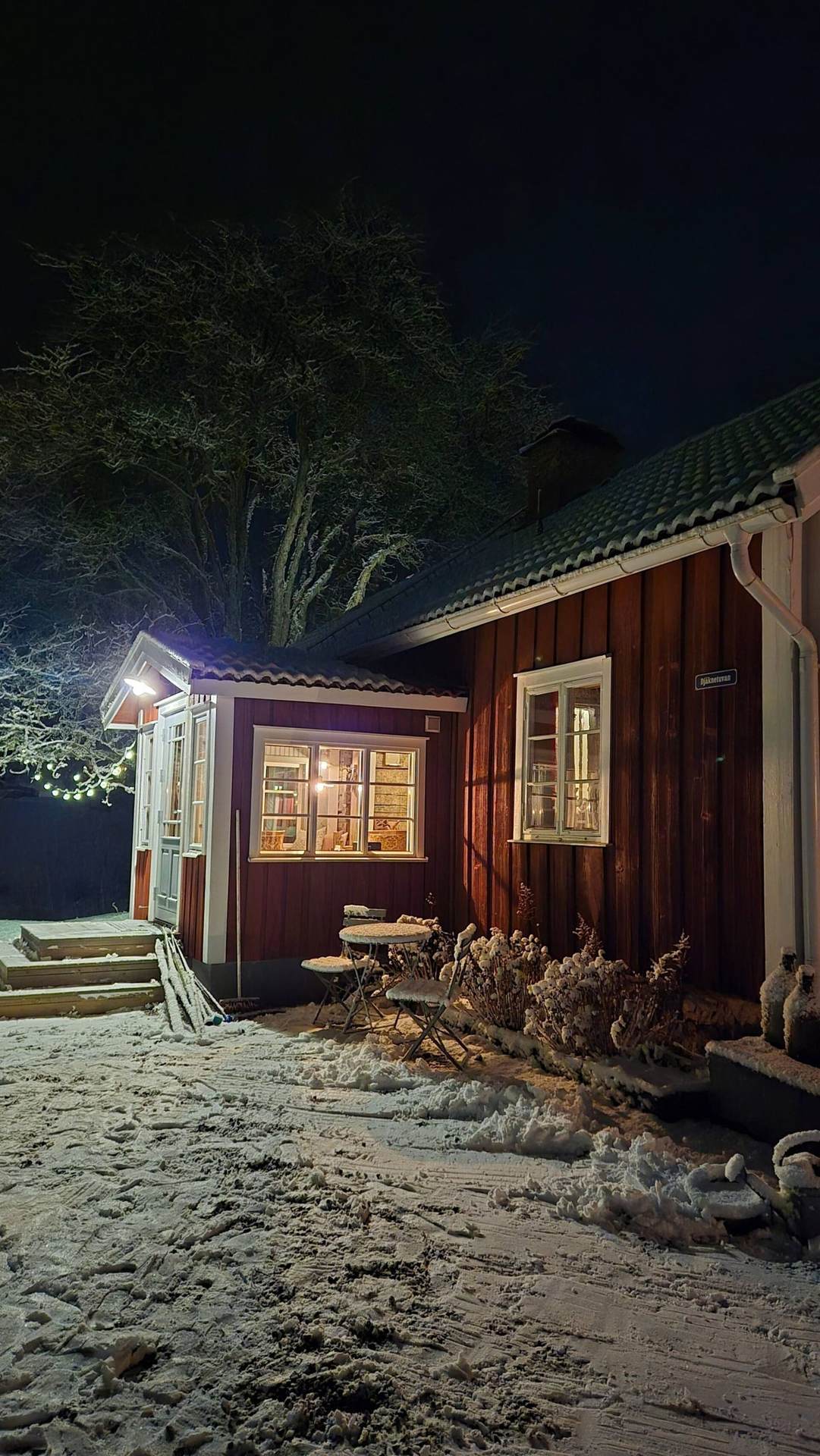
Lights on in the snow
Outdoor lights are on when guests arrive after dark. Inside, the wood-burning fireplace, the wood-fired central heating and the heat pump keep the house warm through a Värmland winter.
“The small house was so cozy in the snow with all the lights!”Christoffer, January 2024
lights on when you arrive
Kitchen
Stove and oven
Dishwasher and freezer
Drip coffee and French press
Blender
Stay and work
Wifi
Workspace in a room with a door
Stays of 28 nights or more
Cleaning during the stay
Comfort
Washer and dryer
Room-darkening shades
Marshall Bluetooth speaker
Books and board games
Arrival
Self check-in with lockbox
Check-in after 15:00
Check-out before 11:00
Free parking at the house
History of the torp
A farm paid for in days of work
A torp was a small farm on land owned by an estate or a larger farmer. The torpare, the crofter, paid for it with labour, working an agreed number of full days a year, called dagsverken, for the landowner.
Large estates relied on it for cheap labour. Crofters paid no tax on the torp, and their right to it could pass to their children.
1500s
A cottage on the common
In the 16th century a torp was a small farm or cottage built on the village common land.
1600s
Tax-free crofts on estate land
The word came to mean a small farm exempt from tax, usually on private land, with the crofter as tenant. Estate owners built up the system to secure labour alongside their regular farmhands.
Early 1600sVärmland
The Forest Finns arrive
Settlers from Savonia and northern Tavastia in Finland moved onto crown land in Värmland, Dalarna and Dalsland and cleared the forest by slash-and-burn.
1700s–1860s
The crofts multiply
Torpare grew steadily in number from the late 1700s, most of all in forest districts.
c. 1850Arvika
Djäknetuva is built
The house was raised in timber using traditional Swedish construction, in the decade before the croft system reached its height.
c. 1860
About 100,000 torp
Sweden had around 100,000 crofts at the system's peak.
From 1870s
Leaving for the towns
The rural poor moved to the towns for industrial work, and the number of torpare fell. By the end of the century many crofts had become ordinary tenancies paid in cash, and the larger ones became leasehold farms.
1943
The system ends
Swedish law prohibited tenancies paid in day labour, and with them the torp in its original sense.
1950s–60s
Cottages for city families
Swedes moved to the cities and took longer holidays, and in the 1950s and 1960s they built holiday homes in large numbers. Today the word torp means a small farm or a country cottage.
Falu rödfärg
Why the house is red
Falun red
The red comes from the Falun copper mine in Dalarna, where mine waste formed an iron-rich red sludge by the 16th century. Heated and mixed with linseed oil and rye flour, it made a paint that protects exterior wood from the weather.
In the 17th century the wealthy painted wooden buildings red to resemble the brick facades of grander houses. During the 19th century farmers and crofters took it up across the countryside, with white corners and window frames.
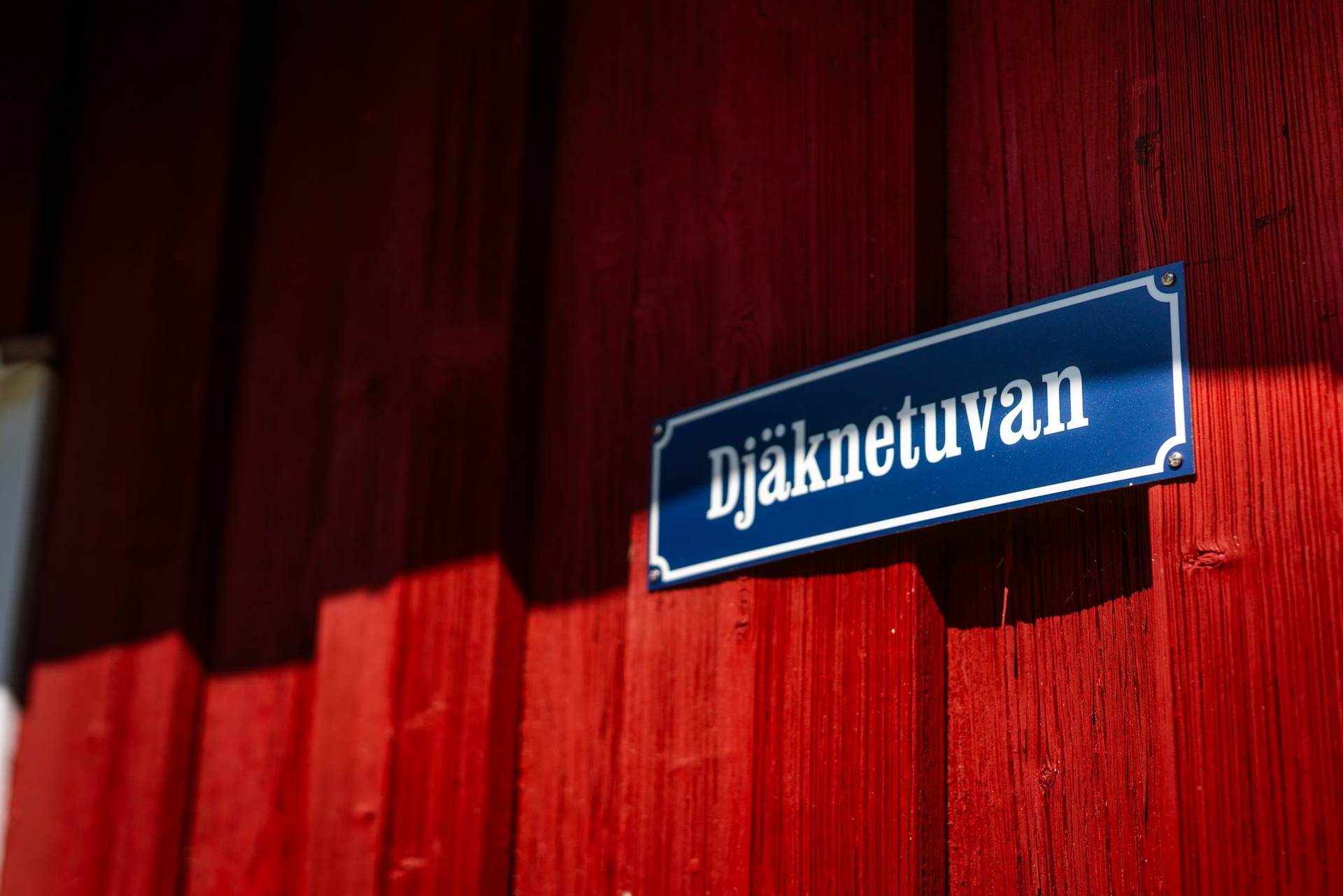
Red walls, white trim, and the name plate on the main house
The name
Djäkne
djäkne · tuva
Djäkne was the medieval Swedish name for a pupil at a cathedral school, and it stayed in use for upper-school pupils long after. In the cathedral town of Strängnäs in the 1600s and 1700s, households earned income lodging and feeding djäknar, who wore short black cloaks called djäknekåpor.
The house is called Djäknetuva, Deacon's House in English.